
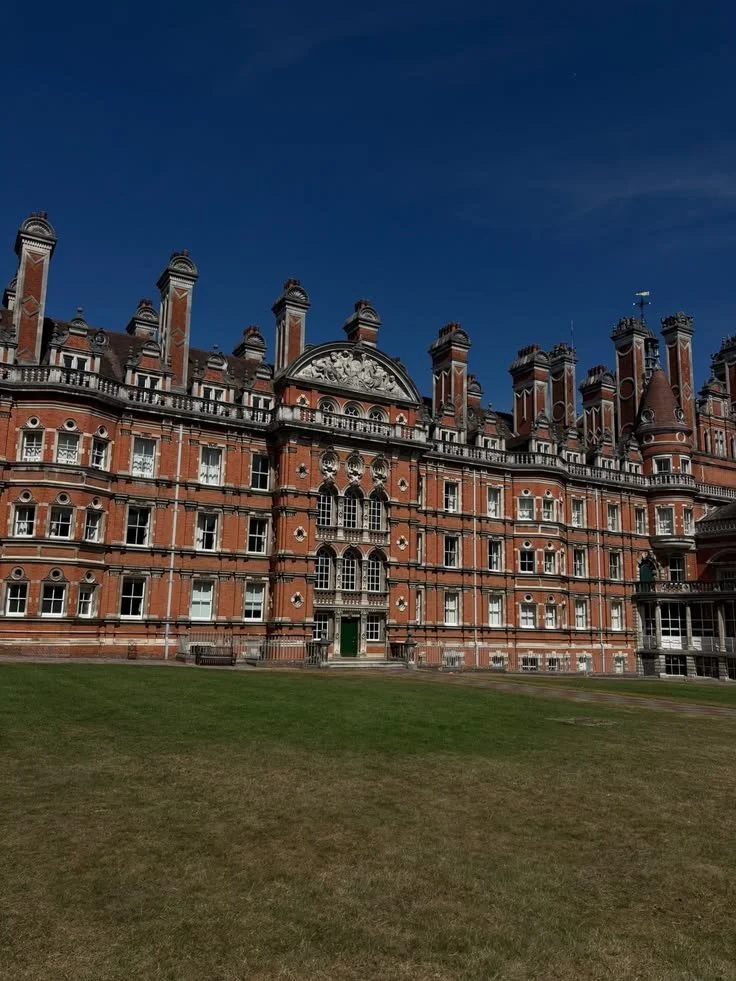
“She got 92%. Surely that’s enough?”
It is one of the first questions parents ask us when their child is finishing school in India.
Sometimes the number is 88, sometimes 96, and our answer is always the slightly annoying one: it depends on the board, the subjects behind that percentage, the university and, most importantly, on the exact course. A mark that makes a student competitive at one British university may not meet the requirements at another.
The good news is that students completing Class 12 in India have a very established route into UK universities. Many institutions accept Indian school qualifications directly, without requiring A levels or an additional year of study.
The difficult part is working out which universities will accept your particular board, subjects and predicted marks — and how to present the application properly through UCAS.
Start with your board, not your percentage
One of the biggest mistakes families make is beginning with university rankings and asking: “Can we get into UCL?” or “Can we apply to King’s?”
The first question should actually be:
Which UK universities accept my child’s Class 12 qualification?
CBSE and CISCE/ISC are the most widely recognised Indian qualifications. State boards can be more complicated. For example, some highly selective universities or individual departments accept only CBSE and CISCE for direct undergraduate entry. Others consider particular state boards, sometimes with higher percentage requirements. This means that two students with 90% may have very different UK university options depending on the board they are studying.
At EducAd Consulting, when we first assess an Indian pupil, we look at four things together: the board, Class 10 results, Class 12 subjects and predicted Class 12 marks.
Only then do we start building the university list.
Your Class 12 subjects can be just as important as your marks
A 95% average does not automatically compensate for not studying a required subject. If a university course requires A-level Mathematics, for example, an Indian applicant will normally need the appropriate Class 12 Mathematics qualification. The same applies to degrees such as Engineering, Computer Science, Medicine and many Economics courses. This is why students who are still in Class 10 or Class 11 should ideally think about UK university requirements before choosing their senior-school subjects. We regularly speak to families when a child is already halfway through Class 12 and discover that the universities on their original list require a subject they are not taking. Sometimes there are alternatives; a foundation year is a better route. But knowing this early gives the student many more options.
What should an Indian pupil actually do in Class 12?
If you are planning to start university in the UK in September 2027, the application work happens largely during Class 12 before your final board results are available.
A sensible timeline is:
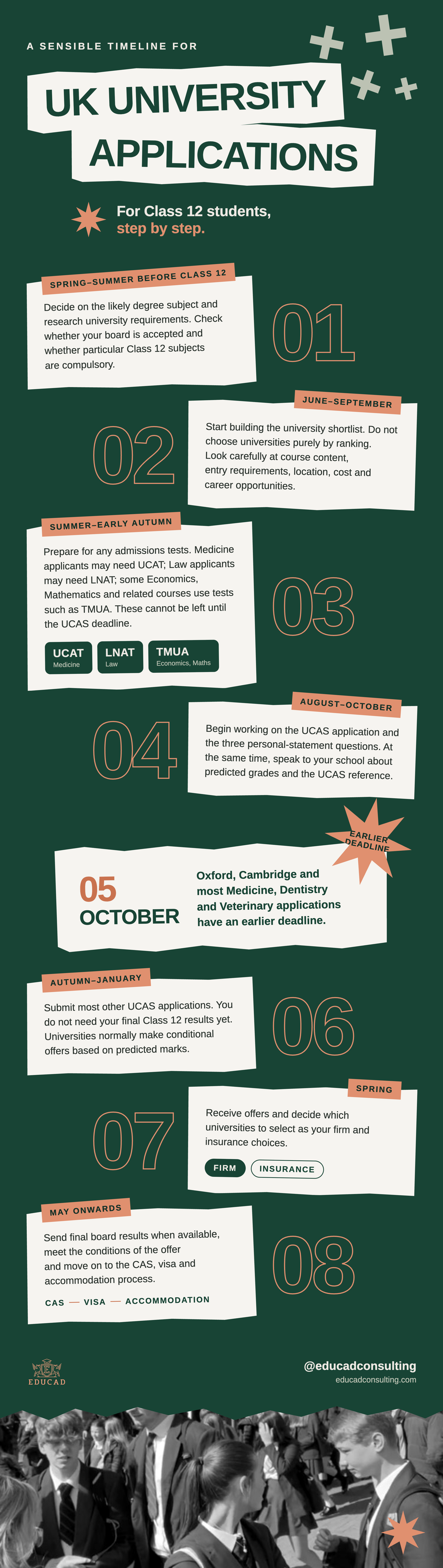
The most important point is that you should not wait for the Class 12 board examinations to start thinking about university. By then, most of the important application work has already happened.
The UCAS reference is where many Indian schools need support
This is one of the areas that surprises families most.
UK applicants normally have teachers and sixth-form staff who write UCAS references every year. They know what British universities expect, how predicted grades work and what information should go into an academic reference. Many excellent schools in India simply do not work with UCAS applications frequently enough for this to be routine. We sometimes see references that are extremely warm but tell the university very little academically. This is an important part of EducAd’s work with pupils applying from India. We do not replace the teacher or write a reference pretending to be the school. Instead, we work with the school. We can explain the UCAS process to the teacher or counsellor, show them what British universities are looking for, advise on the structure and information that should be included, and help make sure that the reference and predicted grades support the rest of the application properly.
The personal statement has changed
The old single UCAS personal statement has been replaced by three structured questions. The principle, however, remains the same: British universities are primarily interested in why you want to study the subject and what you have done to explore it academically.
A long list of Olympiads, competitions, Model United Nations conferences, certificates and leadership positions is not automatically impressive to a UK admissions tutor. If you want to study Economics, for example, we would rather see you discuss an economic question, book, article, research project or idea that genuinely interested you than simply list ten unrelated certificates.
Build five UCAS choices strategically
UCAS allows students to apply to up to five universities. That does not mean choosing the five most famous universities whose entry requirements appear vaguely achievable. We normally recommend building a balanced list. For every university, we check the actual course page, not just the university’s general India entry requirements. We then compare those requirements with the pupil’s board, subjects, predicted marks and academic profile.
For some pupils, all five choices may be highly selective. For others, it makes sense to combine more ambitious applications with universities where an offer is more likely. The strategy should be individual.
Do I need IELTS if I studied in English in India?
Not necessarily. A number of British universities accept particular Class 12 English qualifications and marks instead of IELTS or another English-language test. But the rules vary significantly and you might need it for visa purposes anyways. Do not assume that because your school teaches in English you are automatically exempt from an English test. If IELTS or another test is necessary, it is usually better to know this early rather than discover it when you are trying to meet the conditions of an offer.
What if my board or marks are not accepted?
There are still routes into UK universities like a foundation programme, which is designed to prepare international students for undergraduate study and can be particularly useful when the school qualification is not accepted for direct entry, the student has not taken a required subject, or the academic transition would otherwise be difficult.
But foundation programmes vary enormously; some are run directly by universities while others are provided by partner organisations. Progression to the degree may be guaranteed if certain conditions are met, or it may still be competitive.
This is another area where we advise families to look beyond the word “foundation” and understand exactly where the programme leads.
How EducAd Consulting works with pupils applying from India
Most families who come to us do not have too little information. They have too much information and no clear way to work out what applies to their child. We can work with the family through the whole application, including university and course selection, the three UCAS personal-statement questions, admissions-test planning, Oxbridge preparation where relevant, predicted grades, school references, offer decisions and the transition to the visa and enrolment stage.
The whole process should feel like one coherent application for one individual student.
EducAd Consulting is based in London and has worked with international families navigating British education for more than ten years. You can read more about our university admissions support, or contact us with your child’s current school, board, subjects, predicted grades and intended degree, and we can advise on the next steps.